
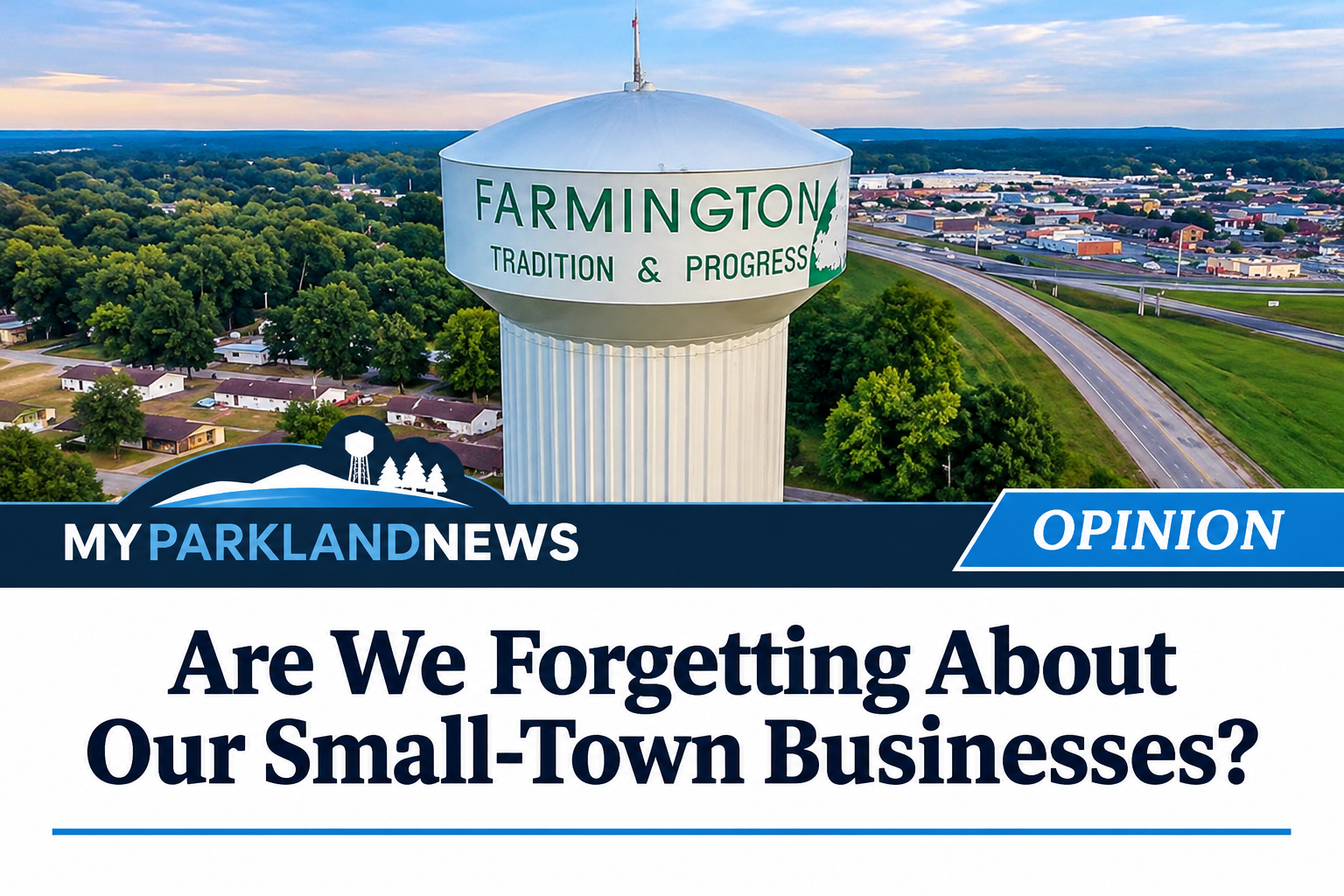
Drive along the main corridors of Farmington and you can watch the landscape change. A new national chain opens, the parking lot fills, the ribbon gets cut, and we all nod along at the promise of convenience, jobs and progress. Meanwhile, a few blocks away, a locally owned shop quietly cuts its hours, or a familiar storefront goes dark. We rarely notice when it happens. That is exactly the problem.Let me be clear: national chains are not the enemy. They employ our neighbors, they offer prices and selection that are hard to match, and many of them sponsor a Little League team or two. Nobody should be shamed for grabbing groceries or household basics where it is easiest. But convenience has a cost that does not show up on a receipt, and across the Farmington area, we are paying it slowly.
Farmington Crossings and the road ahead
The clearest example is taking shape on the west side of town. Farmington Crossings, a 316,064-square-foot open-air shopping center from developer SimonCRE, is going up on roughly 28 acres near Highway 67, and site work is already underway. Planned tenants include a new Target and an Academy Sports + Outdoors, with Burlington also named in leasing materials. Community and business leaders expect new jobs and added sales tax revenue, and the center is designed to draw shoppers from well beyond Farmington itself. That is real investment, and it deserves a fair welcome. More jobs and more reasons to shop at home instead of driving elsewhere are good things for the Farmington area. But a project this size also changes where people spend their time and money, and it raises a question we should answer on purpose rather than by default: what happens to the businesses that were here long before the bulldozers arrived? The best outcome is one where the new center and our established shops feed each other, and where downtown Farmington's specialty stores, restaurants and service providers keep their place at the heart of the community. That will not happen by accident. It happens when residents decide it will.
Where the money goes
When you spend a dollar at a locally owned business, a meaningful share of it stays here. It pays a local employee, who spends it at another local business. It covers the shop's accountant, its printer, its sign-maker and its landlord. It gets recycled through our community again and again. A dollar spent at a national chain, by contrast, tends to leave quickly, headed to a corporate office and shareholders far from St. Francois County. Studies of this "local multiplier effect" have repeatedly found that independent businesses return a larger share of revenue to their communities than chains do. Whatever the exact figure, the direction is not in dispute.
More than a transaction
Small businesses give a town its character. The downtown square, the family-run diner, the hardware store where someone actually knows which part you need, the boutique, the barber shop, the contractor who answers his own phone: these are the places that make Farmington feel like Farmington instead of any exit off any highway in America.They are also the first to show up when we need something. Ask any church fundraiser, school booster club or youth sports team who writes the check, donates the raffle prize or buys the banner on the outfield fence. Very often it is the owner of a business who lives down the road, whose kids go to school with ours. That kind of loyalty cannot be replicated by a corporate giving program.
The quiet squeeze
Small businesses face a brutal math problem. They cannot buy in bulk at national scale, cannot absorb losses for years the way a chain can, and cannot outspend a corporation on advertising. Rising costs hit them harder, and a few slow months can be fatal. When a local owner closes the doors, we usually tell ourselves it was inevitable. It was not. Businesses survive when customers choose them, and they close when customers stop.That means this is not just an economic question. It is a choice we make every day, in small increments, with our wallets.
What we can actually do
None of this requires a dramatic lifestyle change. A few habits would go a long way.
Shift a little, not everything. If every household moved even a modest portion of its monthly spending to local businesses, the difference would be enormous.
Check local first. Before ordering online or driving to the chain store, ask whether someone in town sells it.
Show up for the services. Restaurants, repair shops, salons, contractors and auto shops are often where local options shine.
Spread the word. A good review, a shared post or a recommendation to a neighbor is free and powerful.
Attend local events. Farmers markets, downtown festivals and holiday shopping events keep small businesses visible.This holiday season is a perfect time to start. Before the shopping rush begins in earnest, we can decide where our gift money goes.
A choice about the town we want
The Farmington area will keep growing, and growth is welcome. The question is whether we grow in a way that keeps our own people, our own businesses and our own identity at the center. Chains will continue to arrive whether we cheer or not. Our independent businesses, however, will only stay if we make a point of keeping them.So the next time you are deciding where to spend your money, ask yourself what kind of town you want to live in a decade from now. Then spend accordingly. Our small-town businesses have not forgotten us. We should make sure we do not forget them.